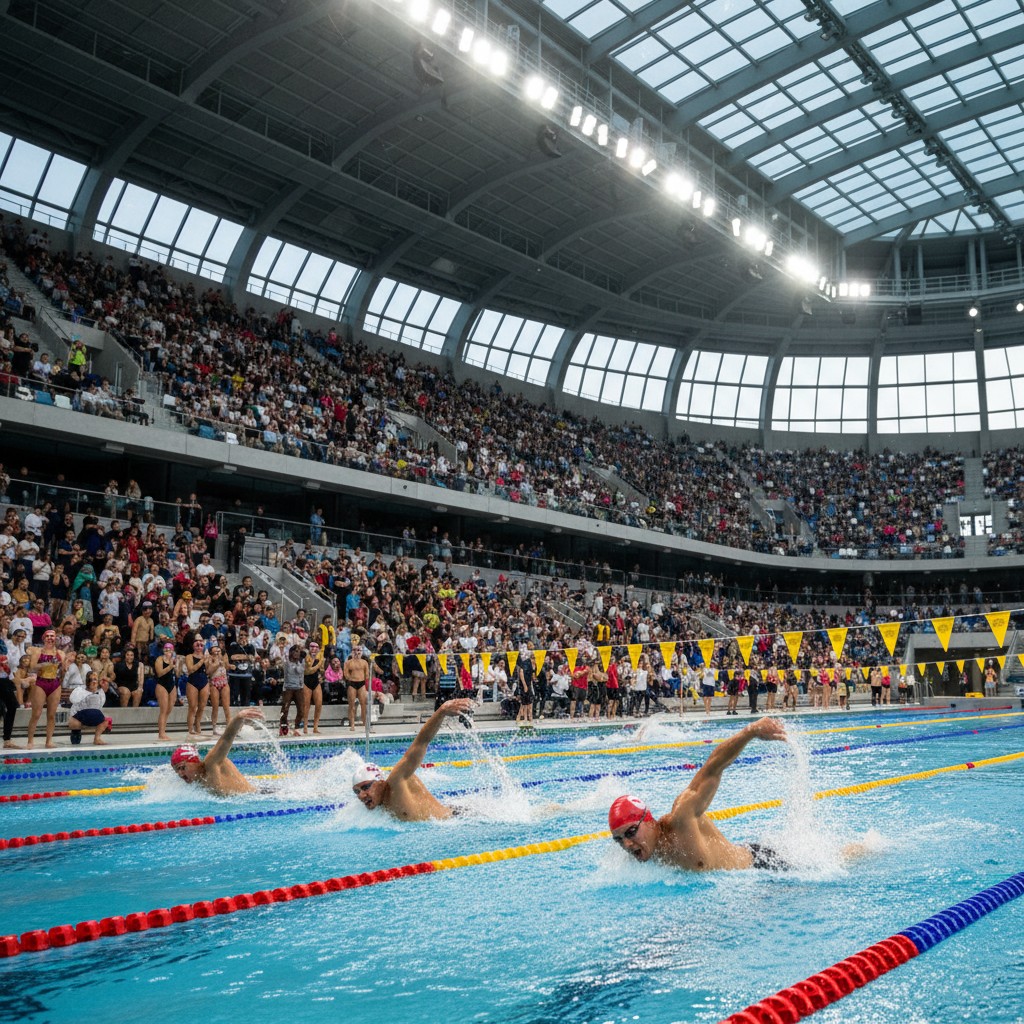
In an era where professional sports have blossomed into a multi-billion dollar global entertainment industry, the International Swimming League (ISL) has emerged as a significant disruptor, actively redefining how professional swimming attracts new commercial revenue streams. Founded in 2018, the ISL set out with an ambitious vision: to unlock the latent commercial potential of professional swimming, a sport historically reliant on quadrennial Olympic cycles for mainstream attention. This endeavor, highlighted by Digital Journal, underscores a broader trend in sports business where innovative leagues are seeking to build marketable products and secure year-round visibility.
Deloitte's 2024 Sports Industry Outlook projects global sports revenues to surpass US$200 billion by 2030, propelled by broadcast rights, sponsorships, and digital engagement. The ISL strategically positioned itself within this burgeoning market, introducing an international club team format and a season designed for continuous broadcasting. This approach aimed to elevate swimming beyond its traditional, often episodic, appeal and establish it as a consistent fixture in the sports calendar.
Repackaging Swimming for the Modern Audience
A cornerstone of the ISL's commercial strategy has been its radical repackaging of competitive swimming. Traditional swim meets, often spanning entire weekends, were reimagined into condensed, high-intensity events. The ISL engineered a compelling narrative built around club rivalries, season standings, and back-to-back races, eliminating pauses in the action and ensuring a dynamic viewing experience. Each ISL meet was meticulously crafted to contribute to a larger season storyline, fostering anticipation and providing broadcasters with ample content to promote upcoming events and sell advertising space. This transformation was crucial in creating a product that could be readily packaged and sold to a modern audience accustomed to fast-paced, narrative-driven sports entertainment.
Unlocking Sponsorship and Brand Value
The ISL’s structure was deliberately designed to appeal to contemporary sponsors who prioritize trackable engagement and expansive global reach. With media rights and sponsorship accounting for a significant 70% of worldwide sports revenue, brands are increasingly gravitating towards properties that offer reliable digital metrics and consistent year-round visibility. The ISL addressed these demands by ensuring that every race generated broadcast footage, live-stream data, and social media content, all of which partners could monitor in real-time. This data-rich environment provided sponsors with tangible evidence of return on investment, a critical factor in today’s competitive sponsorship landscape. Furthermore, the league's commitment to equality, often highlighted in its messaging, served to strengthen its appeal to a broader range of potential partners.
A significant milestone in the ISL's commercial journey was the securing of a multi-year agreement with CBS Sports in 2020. This landmark deal was instrumental in bringing the ISL to North American audiences, effectively transforming swimming from a historically niche sport into a modern media property. This broadcast partnership showcased the league's ability to attract major media players, validating its innovative approach to content creation and distribution.
Ensuring Sustainable Revenue Streams and Athlete Compensation
From its inception, the International Swimming League focused on building a sustainable revenue model that integrated broadcast rights, sponsorship, and digital content. A key element of this model, and central to its long-term viability, was its commitment to athlete compensation. In its nascent seasons, the ISL established a system guaranteeing a base pay for swimmers, supplemented by performance bonuses. This created a reliable professional pathway in a sport where earnings had previously been heavily dependent on Olympic funding or individual sponsorship deals. By aligning athlete incentives with the growth and success of the league, the ISL aimed to strengthen its overall commercial product and attract top talent.
Navigating Challenges and Demonstrating Resilience
Despite its innovative commercial strategies, the ISL has not been without its challenges. Early on, concerns were raised regarding the league's financial sustainability, with founder Konstantin Grigorishin reportedly willing to invest over $25 million annually from his personal fortune to launch the league. Experts noted that the ISL faced a challenging road to sustainability based solely on its own commercial revenue. Grigorishin himself acknowledged the financial and commercial difficulties, particularly the impact of the pandemic on the league's second season, which forced adjustments to initial financial targets. There were also reports of legal action threats over unpaid fees, with a British digital agency claiming a six-figure sum was owed by the ISL in 2020. The ISL stated it was in proactive discussions to structure a payment plan, emphasizing the challenges of safely launching Season 2020 amid the global pandemic.
However, the league continued to develop its "gamification environment," exploring areas like betting and fantasy leagues to diversify revenue streams and enhance fan engagement. Grigorishin expressed confidence in the product, noting growing interest from potential sponsors following the successes of the initial seasons and encouraging TV and digital audiences for a "startup" sports entity. The ISL's first-year budget was estimated at approximately $20 million, with significant allocations for athlete appearance and prize money, TV production, and logistics, demonstrating a substantial investment in creating a high-quality product.
A Blueprint for Other Olympic Sports
The International Swimming League’s journey in redefining commercial revenue serves as a compelling blueprint for other Olympic sports. Many such sports garner immense viewership during major quadrennial events like the Olympic Games but struggle to maintain visibility and commercial traction in the intervening years. The ISL’s success in creating a marketable, year-round product, attracting significant media deals, and establishing a professional pathway for athletes offers a model for transforming niche sports into modern media properties with sustainable revenue streams.
By focusing on dynamic presentation, compelling narratives, and strategic digital engagement, the ISL has demonstrated that with innovative thinking, even traditionally less commercially robust sports can tap into the vast potential of the global sports entertainment market. Its efforts highlight a crucial shift in sports business: moving away from sporadic event-based revenue to a more consistent, fan-centric, and commercially integrated model.