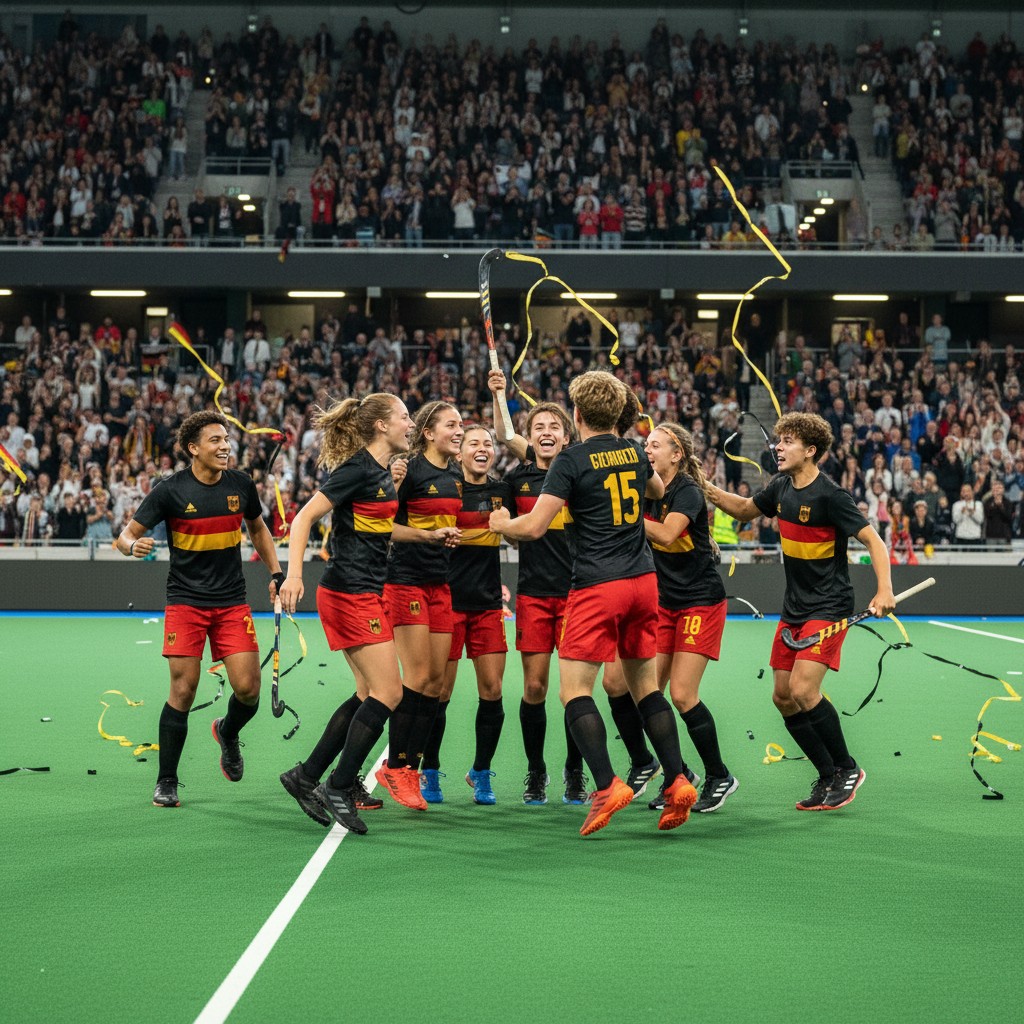
In a sporting landscape often dominated by the behemoth of football, Germany has cultivated an unlikely, yet undeniable, dynasty in junior field hockey. As the 'Die Honamas' colts chased their eighth Junior World Cup title, their journey through the current FIH Junior Men's Hockey World Cup in India has once again highlighted a meticulously crafted ecosystem that consistently produces world-beating talent. The nation's success in a sport considered "small" locally is a testament to a deep-rooted structure and a unique developmental philosophy.
The German Model: Club Culture as the Cornerstone
Germany's prowess in field hockey is not a fleeting phenomenon but rather the result of a robust, decades-old club structure that remains central to their growth. Unlike football, where the influence of diverse immigrant communities has enriched playing styles, hockey has largely retained traditional foundations. This limited spread, paradoxically, has allowed Germany’s hockey structure to remain consistent and stable for decades.
"Football is the No 1 sport in Germany. If we could choose, we'd probably have a lot more people from everywhere, from different backgrounds. But hockey is traditionally a very small sport in Germany, so we don't really have the same talent pool as football or even basketball and handball," co-head coach Mirko Stenzel told TOI.
Despite this smaller talent pool, the quality of development is exceptional. Most German players pick up a stick by the age of five or six, nurtured within clubs that boast high-performance programs, many of which are more than a century old. Co-head coach Johannes Schmitz emphasized that these clubs "are still the key reason why German national teams are successful." The system prioritizes continuous development within these club environments, meaning players don't endure months of centralized national camps. Instead, they assemble for brief, high-quality national stints, typically lasting five days to a week. Longevity and a focus on fundamental skill development are hallmarks of this approach.
An interesting aspect highlighted by Stenzel is that all players in the current junior squad are German-born, further underscoring the effectiveness of their indigenous talent development pipeline.
A Dominant Campaign at the FIH Junior World Cup 2025
Germany entered the 2025 FIH Junior Men's Hockey World Cup as defending champions and strong favorites, a status they have emphatically upheld throughout the tournament. Their campaign began with an unblemished record in the round-robin stage, securing victories against South Africa, Canada, and Ireland.
Crucial Victories on the Path to the Final
One of their most defining moments came in the quarter-final clash against last edition's runners-up, France. The match ended in a thrilling 2-2 draw in regulation time, pushing it to a penalty shootout. Goalkeeper Jasper Ditzer emerged as the hero, producing a series of crucial saves during normal play and then making three decisive stops in the shootout, securing a 3-1 victory for Germany and their 13th semi-final appearance in 14 editions. Key goals in regulation time were scored by Alec von Schwerin, assisted by Ferdinand Steinebach, and Paul Glander from a penalty corner.
The semi-final presented another formidable challenge as Germany faced hosts India. In a commanding performance, Germany delivered a comprehensive 5-1 victory, breaking the hearts of the home crowd in Chennai. This win marked Germany's third consecutive semi-final triumph over India at the Junior World Cup and secured their 10th appearance in the final.
The German offensive was clinical, with Lukas Kossel scoring a brace. Ben Hasbach added an exquisite diving goal, beating India's goalkeeper Bikramjit Singh, in a moment described as pure artistry and arguably one of the best goals of the tournament. Wex Titus and Jonas von Gersum also registered their names on the scoresheet. Germany's high-press attacking game, characterized by disciplined marking and off-the-ball running, combined with a rigid defensive structure, proved too much for their opponents.
Eyeing an Eighth Crown Against First-Time Finalists Spain
Having navigated a challenging path, Germany, the most successful team in the history of the FIH Junior Men's World Cup, is now set to compete for their eighth title. They will face first-time finalists Spain in the championship match, a testament to their consistent excellence and the enduring strength of their developmental model. The tournament, which began on November 28, is culminating on December 10, with Germany once again at its pinnacle.
The German junior hockey team's journey is a powerful narrative of how structure, tradition, and a steadfast commitment to foundational development can lead to unparalleled success, even for a "small" sport in a football-mad nation. Their continued dominance on the world stage serves as a template for cultivating sporting excellence from the grassroots up.