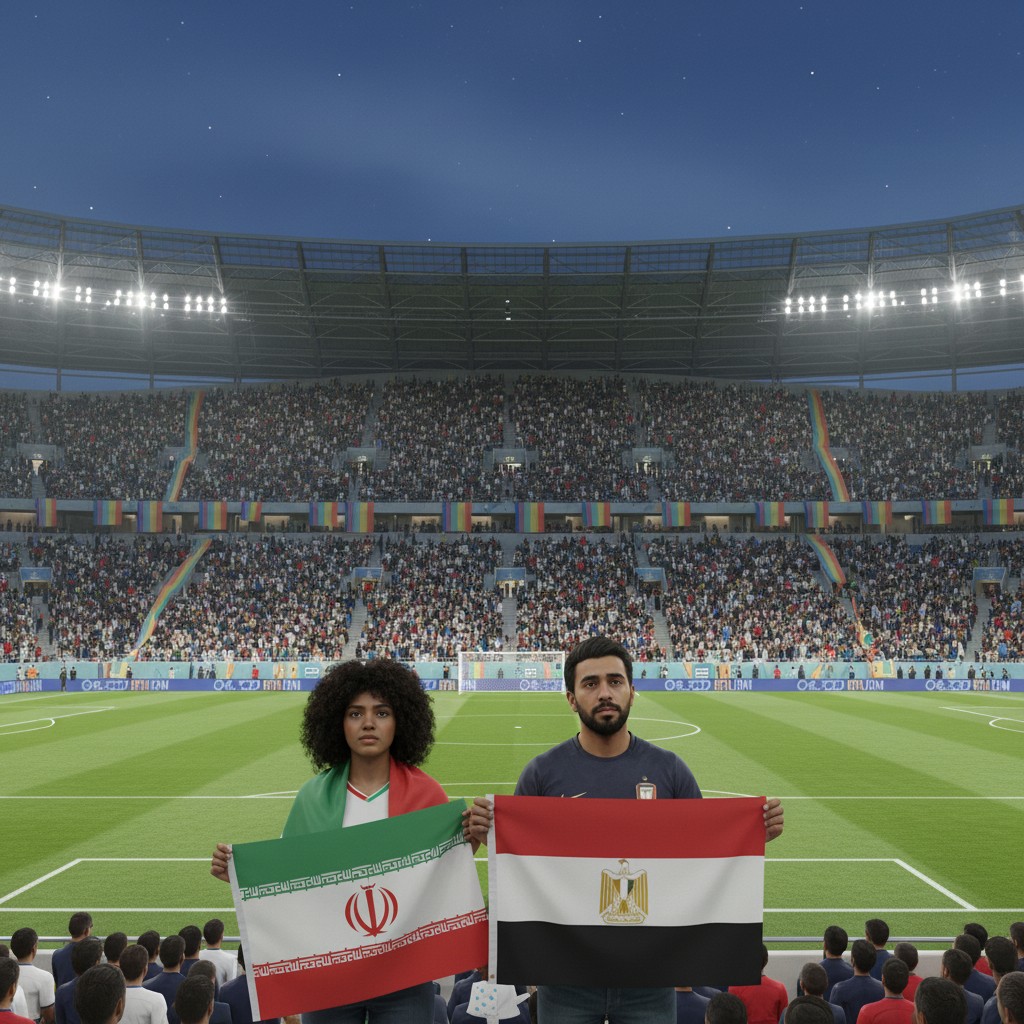
The road to the 2026 FIFA World Cup has hit an early snag, not on the pitch, but in the realm of cultural and political sensitivities. A proposed "Gay Pride Match" by Seattle's local organizing committee for a Group G fixture between Iran and Egypt on July 26, 2026, at Lumen Field Stadium has ignited a diplomatic firestorm, prompting formal complaints from both the Iranian and Egyptian football federations to FIFA. This controversy unfolds as broadcasters celebrate FIFA's concurrent announcement of new, standardized 3-minute water breaks for all matches in the 2026 tournament, a move aimed at player welfare.
International Outcry Over Seattle's 'Gay Pride Match' Proposal
According to reports from Iran's semi-official Tasnim News Agency, and subsequently detailed by The Sports Examiner, members of the Seattle 2026 World Cup local organizing committee reportedly considered designating the Iran vs. Egypt match as a "Gay Pride Match" to honor and celebrate "Gay Pride Month". This alleged decision, however, has been met with immediate and forceful opposition from the involved nations.
The Iranian Football Federation has indicated its intent to formally question FIFA on the matter. The Tasnim News Agency, via a computer translation from the original Farsi, highlighted the perceived "mischievous" nature of such a decision, especially given that "the people of Iran and Egypt are Muslims". The federation plans to send a letter to FIFA to correspond about holding the game under this title and "such issues being brought to the stadium".
Echoing Iran's sentiments, the Egyptian Football Association has also taken a firm stance. In an official letter dispatched to FIFA Secretary General Mattias Grafström, the Egyptian federation categorically rejected any activities "related to supporting (homosexuality) during that match". The letter underscored that such activities "directly contradict the cultural, religious and social values in the region, especially in Arab and Islamic societies". This dual protest from two prominent Muslim-majority nations signals a significant challenge to the host city's proposed event, emphasizing the clash of cultural norms on the global sporting stage.
While the initial reports, particularly from American media outlets like 'Outsports', suggested Seattle officials' intention for this action, it was also claimed that "the match will be played as scheduled, with Iran and Egypt facing each other in this stadium". The exact status of the "Gay Pride Match" designation following these protests remains a developing story, but the strong reactions from Iran and Egypt have certainly put the matter under intense scrutiny.
FIFA Introduces New Hydration Breaks for Player Welfare
In a separate, less contentious, but equally significant development for the 2026 FIFA World Cup, the global football governing body has announced the implementation of standardized 3-minute hydration breaks for all matches. This new protocol dictates that referees will stop play for three minutes after approximately 22 minutes of play in each half, regardless of the venue or prevailing weather conditions.
This decision has been met with approval from broadcasters and is framed as a focused attempt to prioritize player well-being. FIFA's announcement stated that "The use of hydration breaks is part of a focused attempt to ensure the best possible conditions for players, drawing upon the experiences of previous tournaments, including the recent FIFA Club World Cup, which took place in the United States last summer". The introduction of these mandatory breaks aims to mitigate the physical demands on athletes, especially considering the expanded format and diverse climatic conditions expected across the host cities for the 2026 tournament.
The 2026 FIFA World Cup is set to be a landmark event, not only for its expanded format and multi-nation hosting but also for the early emergence of complex issues blending sports with socio-political and cultural narratives. As preparations continue, the football world will be watching closely to see how FIFA navigates these challenges, balancing the celebration of diversity with respect for differing cultural and religious values, all while ensuring optimal conditions for its athletes.